How long a water heater lasts in New Jersey

Describe your water heater job, and a local pro who handles it gets in touch.

Get matched

How long does a water heater last in NJ?

You're probably asking because yours is getting old, acting up, or just hit double digits and you want to know if you're on borrowed time. Maybe it's leaking a little, or the water isn't as hot as it used to be. Either way, you want a real number, not a guess, so you can plan for a new one instead of getting caught with a flooded basement.

Most water heaters in New Jersey last 8 to 12 years

A tank water heater in New Jersey typically lasts between 8 and 12 years. Most homes here run on gas, and a gas water heater tends to wear on the lower end of that range because the burner and flue put more stress on the tank over time than an electric unit would. Hard water in parts of the state speeds up the sediment buildup that eats away at the tank lining, which is usually what causes a water heater to fail. Once yours passes 10 years, it's worth checking for rust around the base, a pilot light that won't stay lit, or water that takes longer to heat. Those are signs it's closer to the end than the middle.

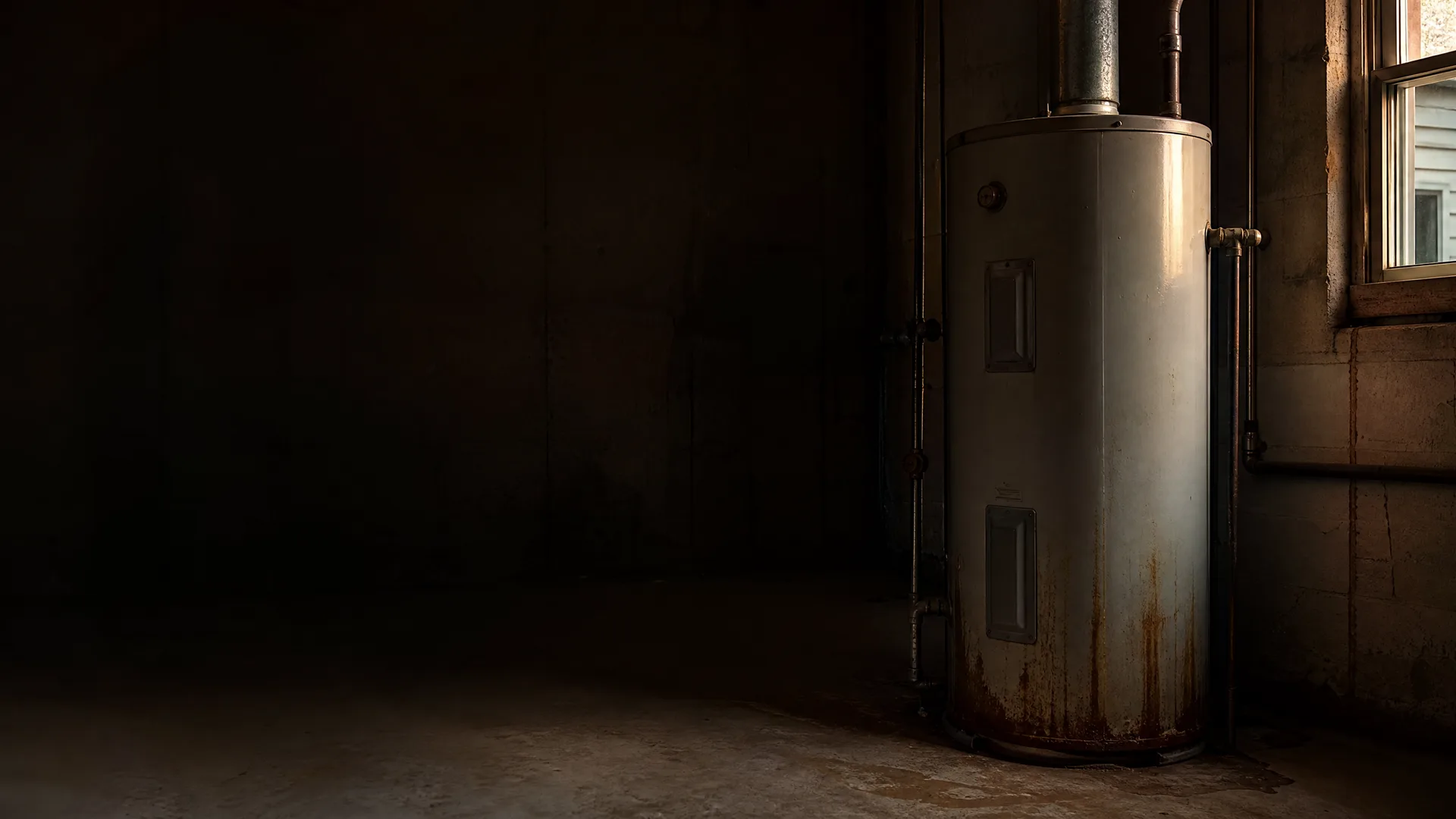
A rusting cylindrical water heater with connected pipes stands against a dim concrete basement wall near a window.

You go down to the utility room after dinner to grab something from the shelf, and the light's dim because the bulb's been out a week. That's when you see it: a rust-colored streak running down the side of the tank, pooling at the base where the floor meets the drain. The metal's cool to the touch, not leaking fast, just a slow weep that's been going on long enough to leave a mark. You crouch down and press a finger to the stain. It's damp. You think about the last time anyone looked at this thing, and you can't remember. The furnace next to it kicks on, and you stand there a minute, just looking at the rust, deciding what tomorrow looks like.


Is your water heater just getting old, or failing?

A tank past ten or twelve years doesn't usually fail all at once. First the hot water doesn't last as long as it used to, or it runs lukewarm by the time the second shower starts. You might hear a low rumble or popping from the tank, that's sediment sitting on the bottom, between the burner and the water. The pilot or burner might kick on more than it used to just to keep up. None of that stops you cold, so it's easy to live with for months. But a tank that's struggling to heat is usually a tank that's also closer to the kind of leak that ruins a floor, not just a nuisance you work around.

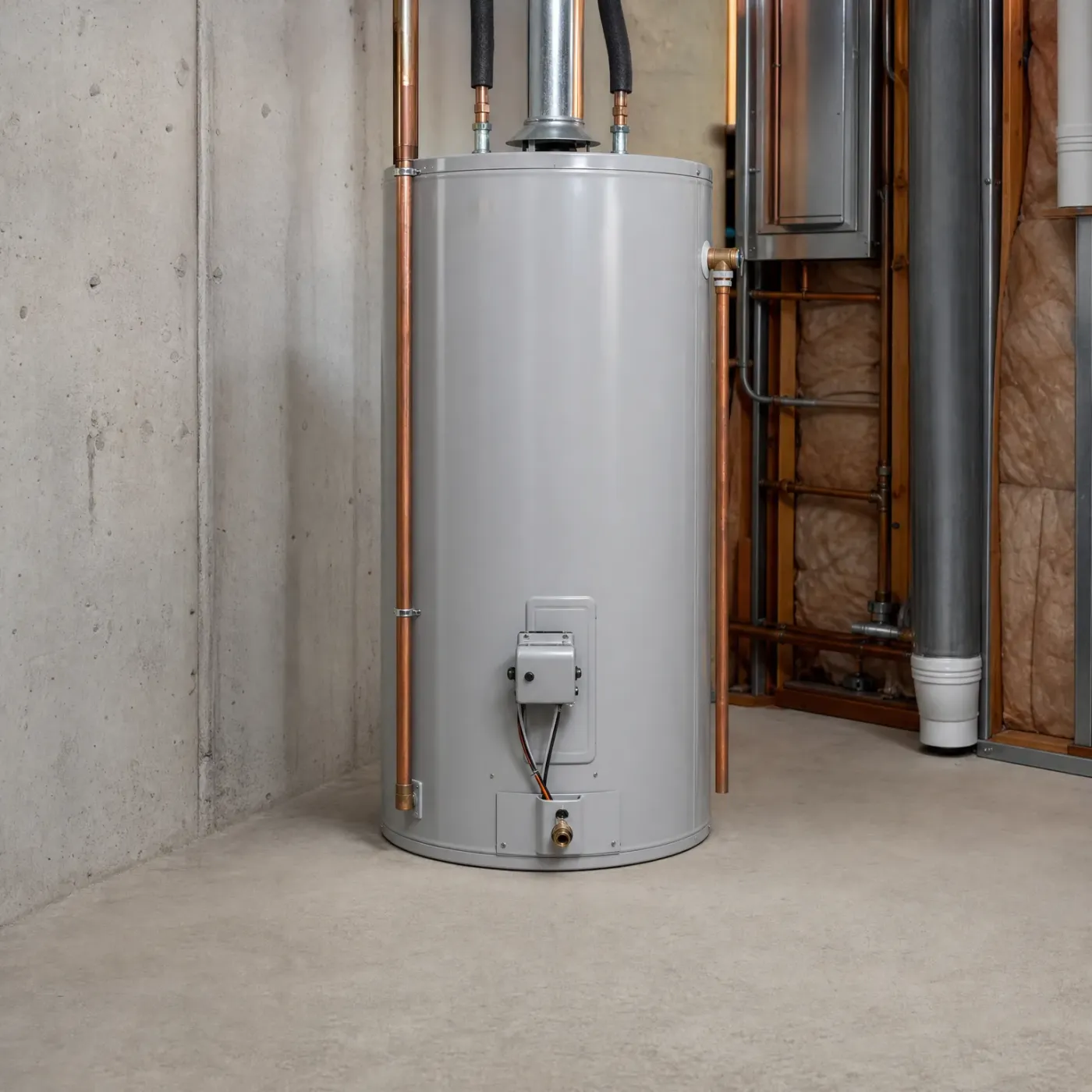
A gray cylindrical water heater stands in a basement corner against a concrete wall, with copper pipes, insulated flex lines, a metal flue, and insulated wall framing with ductwork to the right.

Working as it should

A gas water heater like this one heats water on demand, with the flue carrying exhaust safely out through the roof. The tank is clean, the fittings are dry, and the pressure relief valve hasn't needed to do its job. This is what a unit still inside its expected life looks like.

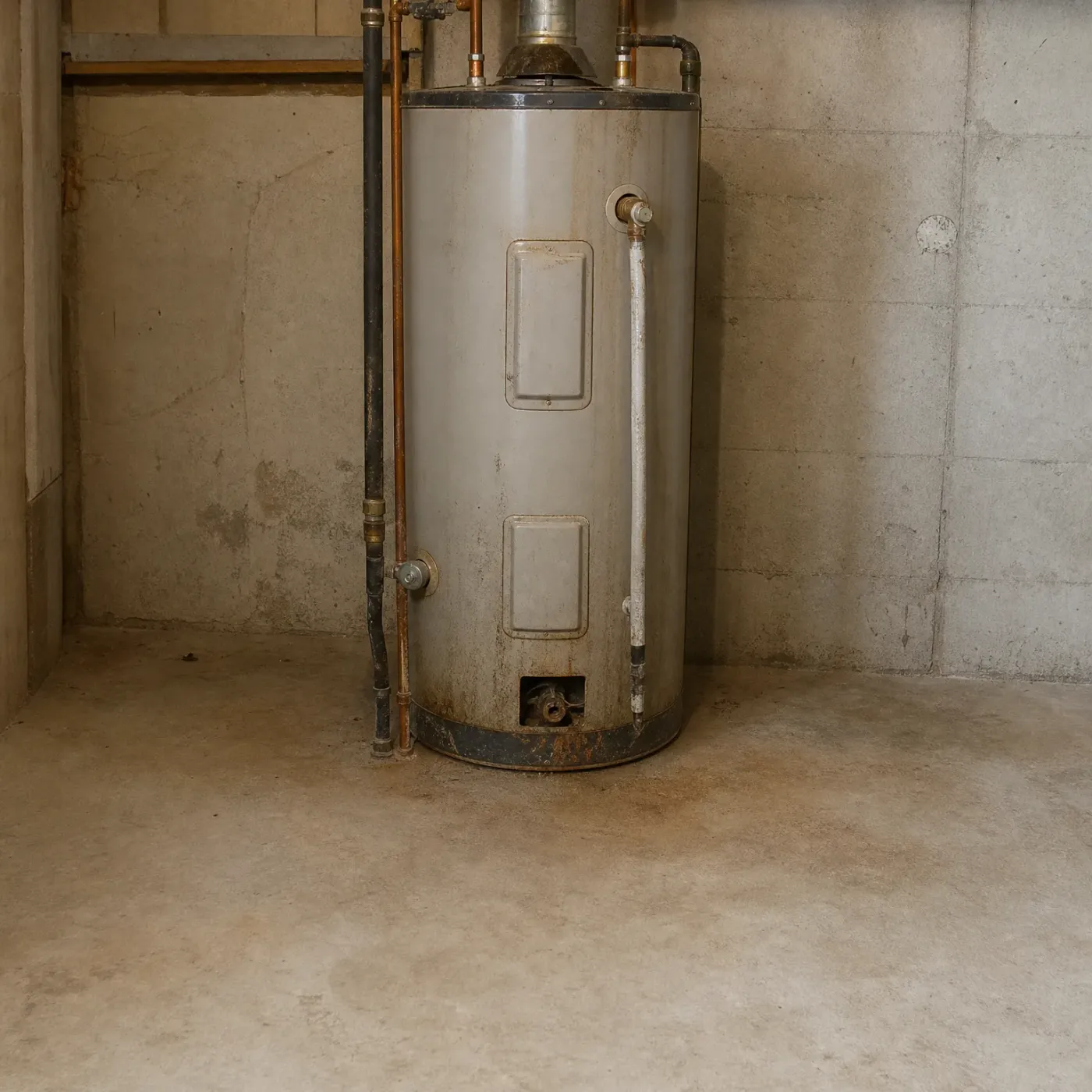
A rusting gas water heater with copper and steel pipes stands against a concrete block wall on a bare concrete floor.

Past its point

Rust creeping down the tank and pooling at the base means the steel is failing from the inside out. Once corrosion shows on the outside like this, the inside has been corroding longer. An electric water heater in this shape isn't one to wait on, since the next stage is water on the floor.

73.1% of homes statewide heat with gas

Odds are your water heater runs on gas too, since most homes here do. Gas tanks tend to hold up a little longer than electric ones, but twelve years is still about as far as you should expect one to go before it starts failing.

ACS 2020-2024 5-year B25040

A gray cylindrical water heater standing in a basement corner against a concrete wall, with copper and black pipes, a metal flue, and ductwork nearby, next to wood framing on the right.
Working right, the gas line, copper piping and flue all meet the tank clean and dry, with no strain on any fitting.
A gray cylindrical gas water heater with copper and black pipes stands in the corner of a basement with concrete block walls and a bare concrete floor.
Here, the gas valve and control unit sit low near iron piping that has had years to corrode and loosen.
A woman wrapped in a thick beige fleece blanket sits on a sofa with an open book on her lap, beside a lit table lamp, with a frost-covered window behind her.
A gray-haired woman in a cream knit sweater stands in a dimly lit kitchen at night, looking to her right, with a round loaf of bread in the foreground and a dark window and potted plant behind her.

A local pro for your water heater installation

Your request goes to one pro, not a list of companies.

Sending the form costs nothing.

Where That Leaves You

  • Ten to twelve years is the honest range for a water heater in New Jersey, gas or electric.
  • Rust at the base, lukewarm water, or a low rumble from the tank are signs it's closer to the end than the middle.
  • A tank that's already showing those signs is worth getting looked at before it fails on its own schedule, not yours.
  • A local contractor who installs these year-round knows which brands and setups tend to fail early in this area.
  • Matching with one licensed local installer means a single call back, not a string of competing quotes to sort through.
  • Once you know which signs point to age and which point to failure, the next step is getting someone qualified to confirm it.

Ten to twelve years, gas or electric. That's the range that holds up across New Jersey, and everything above this section has been pointing at that same number from a different angle. If your tank is somewhere in that window and you've noticed rust at the base, water that doesn't stay hot, or a rumble that wasn't there before, you're not imagining it. That's what the end of a water heater's life actually looks like here, not a sudden flood but a tank telling you it's closer to done than not.

What you do with that is the only open question now. A tank showing those signs doesn't usually wait for a convenient time to fail, so the honest move is getting it looked at before it picks its own moment. When you do, who looks at it matters more than people expect. Someone who installs water heaters in this area all year has seen which brands hold up and which ones give out early, and what tends to go wrong with setups like yours. That's different from a general plumber taking a look between other jobs.

Getting matched means one licensed local installer reaches out, not a handful of companies competing for your number. You get someone who knows this equipment and this area, looking at your specific tank, with a straight answer about whether it's worth repairing or time to replace it.

At dusk, a dark board-and-batten house with a standing-seam metal roof and lit entry walkway of stone pavers, with two large outdoor heat pump units on a stone-walled pad at right and trees and hills in the background.

Water Heater Installation

Get the right pro for your water heater

Step 1 of 3: Equipment
  • A corner of a room with an upholstered wood-framed armchair holding a floral pillow, a round side table with a ceramic lamp, books and a vase of greenery, a framed landscape painting on the wall, a patterned rug, and a sunlit multi-pane window.
    • A local pro who knows water heaters gets your details and gets in touch.
    • Get in touch with a local installer about a new water heater.
  • Interior corner with a wood-framed window showing green foliage outside, a framed landscape print on a beige wall, and a rounded stone vase of leafy branches on a wooden cabinet.
    • Once you send the form, finding a pro is off your list.
    • After you send the request, you're done searching.
  • A pale ceramic vase holding olive branches sits on a dark wooden countertop beside a carved wooden dough bowl, next to a wood-framed window and a light painted plank wall.
    • Answer a few questions instead of calling shop after shop.
    • Describe your water heater job once, to one pro.
  • A dark wood round side table holding a brass lamp with a cream shade, a blue-and-white patterned bowl, and a white textured pot of greenery, beside an upholstered chair with a gray patterned cushion and a white-framed window showing green trees and flowering shrubs.
    • The pro who reaches out is licensed in New Jersey.
    • Only one pro gets your request, so you hear from one company.