








Profile view of a bearded man wearing a black baseball cap and a dark gray T-shirt against a plain light background.

How often to flush a water heater in New Jersey

Step 1 of 3: Equipment

Flush your water heater once a year. Most homes in New Jersey get water from a public supply, and even treated water carries dissolved minerals that settle as sediment at the bottom of the tank once the water heats. That layer builds slowly. Over time it makes the burner or heating element work through a layer of grit to heat the water above it, and a gas water heater running under that kind of strain burns more gas to do the same job. The sediment also traps heat against the bottom of the tank, which wears at the metal faster than clean water would. A once-a-year flush clears that layer out before it hardens into something a hose can't move. If your water heater came with the house and nobody can say when it was last flushed, that is worth checking into, since a tank left alone for years can need more than a simple flush to recover.

A bearded man in a blue and brown plaid flannel shirt stands indoors looking out a window at snow-covered trees, with a ceramic mug on the windowsill.
A man in a blue T-shirt sits on a light gray sofa, laughing while looking at an open laptop in the foreground, with a framed picture, lamp and potted plant behind him.

Why Sediment Builds in the Tank

  • Sediment settles because hot water can't hold dissolved minerals the way cold water does.
  • A gas water heater heats the tank from a burner underneath, so sediment sits right where the heat hits hardest.
  • That layer acts like a blanket between the flame and the water, so the burner runs longer to do the same job.
  • Thick enough sediment can trap water underneath it, and that trapped water boils and pops, which is why an old tank starts rumbling or knocking.
  • Draining the tank through the drain valve at the bottom clears the sediment out before it hardens into a crust.
  • Left long enough, that crust can pit the steel tank itself, which a flush alone can no longer fix.

Water can't hold onto dissolved minerals once it heats up, so they drop out and settle at the bottom of the tank. In a gas water heater, that's a problem because the burner sits underneath, heating the tank from below. The sediment lands right on top of where the flame does its work. Once it's down there, it acts like a layer of insulation between the burner and the water above it. The burner has to run longer to get the same water hot, since it's heating through a layer of grit first instead of straight through steel. Left alone, that layer doesn't stay loose. Water gets trapped underneath it, and as the burner keeps firing, that trapped water turns to steam and pushes its way out, which is what makes an older, neglected tank start rumbling or knocking while it heats. That sound is sediment, not the tank itself failing, but it's a sign the layer has been sitting there a while. A flush clears the tank by opening the drain valve at the bottom and letting the sediment wash out with the water before it has a chance to harden. Once it hardens into a crust, draining the tank won't lift it anymore. Left that long, the crust can sit against the steel long enough to pit it, and at that point a flush isn't fixing the underlying problem anymore.

A woman in a cream cowl-neck sweater sits by a window with snow outside, in a dimly lit living room with a sofa, lit lamp, mirror, candles and a fireplace.
A woman in a gray turtleneck sweater sits beside a large window looking out at snow-covered evergreen trees, in a dimly lit living room with a lit fireplace, lamps, couch and houseplant.
A woman in a cream turtleneck sweater stands beside a large window with snow-covered ground and bare trees outside, in a dimly lit living room with lamps, a sofa and framed art.
A woman in a grey cowl-neck sweater stands indoors near a window, looking out at falling snow, with a lamp, framed picture and couch in the warmly lit room behind her.

Matched to your water heater job

Send the form, and lining up the water heater tune-up stops being yours to chase.

No charge to send it. You decide if you hire them.

A tank running on a gas burner is heating through that sediment layer every time it fires, which means more gas burned to get the same hot water at the tap.

With power costs in New Jersey among the highest in the country, a water heater working harder than it needs to shows up on the bill long before it fails outright.

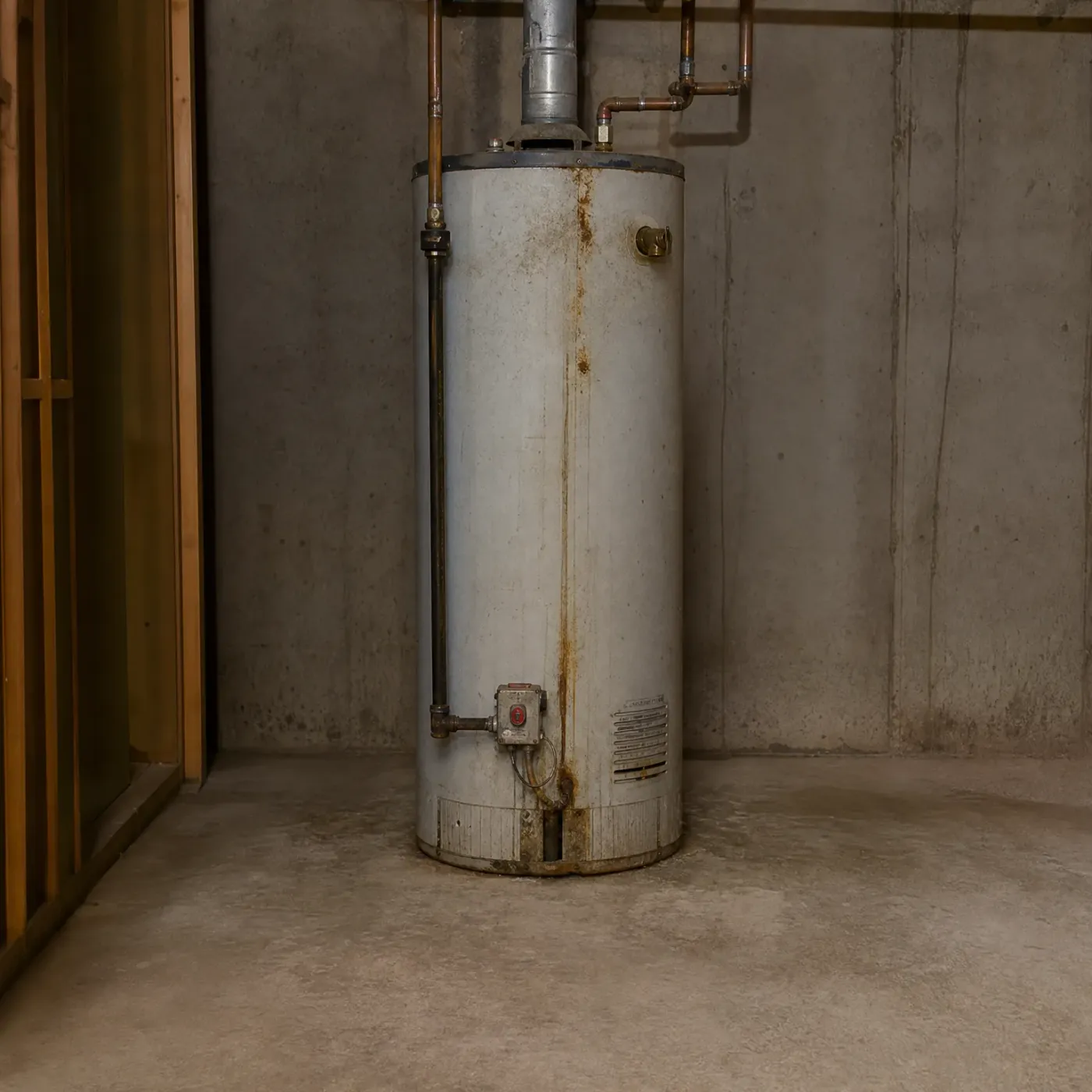
An aging rust-streaked gas water heater with copper and galvanized pipes stands against a bare concrete basement wall beside wooden stud framing.
Before you get your water heater maintenance
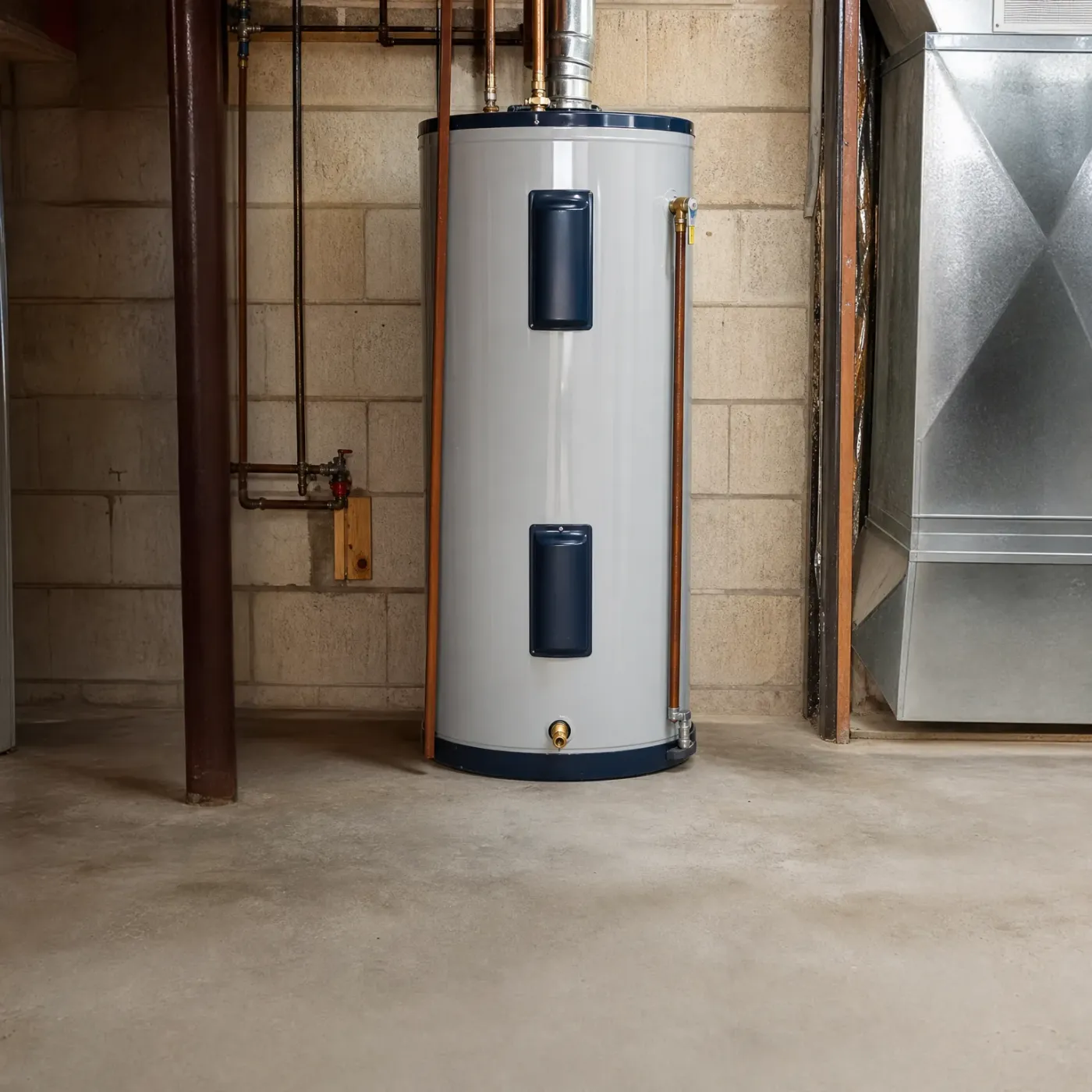
A gray cylindrical water heater with two access panels and copper piping stands against a concrete wall in a basement, beside wood framing and metal ductwork.
After you get your water heater maintenance

What a neglected tank sounds like

A gas water heater working under a thick layer of sediment makes noise. The sediment hardens and shifts as the burner heats it, and you hear popping or rumbling from the tank. Some homeowners notice it first thing in the morning when the burner kicks on for the first heat cycle of the day. That noise means the burner is firing against a barrier instead of a clean tank bottom. Left alone, the sediment keeps hardening, and the tank keeps working harder to push heat through it. Flushing once a year clears that layer before it has a chance to bake on.

What it puts at risk

A tank heating through sediment runs hotter at the bottom than it was built for, and that stress wears on the steel over years. Most manufacturers build these tanks to last a decade or more, but that figure assumes the sediment gets cleared out. Skip the yearly flush and the tank can fail well before that, sometimes with a leak that shows up as water pooling on the floor around it. A flush is a small task next to replacing the whole unit. For a household already paying some of the highest power costs in the country, a tank that fails early is the harder bill to carry.

73.1% of homes statewide heat with gas

Most homes in New Jersey heat water with a gas burner rather than an electric element. That means your tank sits right over the flame, so sediment buildup costs you more in wasted gas than it would in an electric tank, and flushing it matters more.

ACS 2020-2024 5-year B25040

A white cylindrical water heater with two dark access panels stands on a concrete basement floor against a concrete block wall, with copper pipes, a flue duct above, and sheet metal ductwork at right.

A tank that's been flushed on schedule

Copper lines run clean to the tank, connections tight, exhaust duct clear. Water moves through without a layer of sediment slowing the heat down, so the burner underneath isn't working through buildup to get the tank hot.
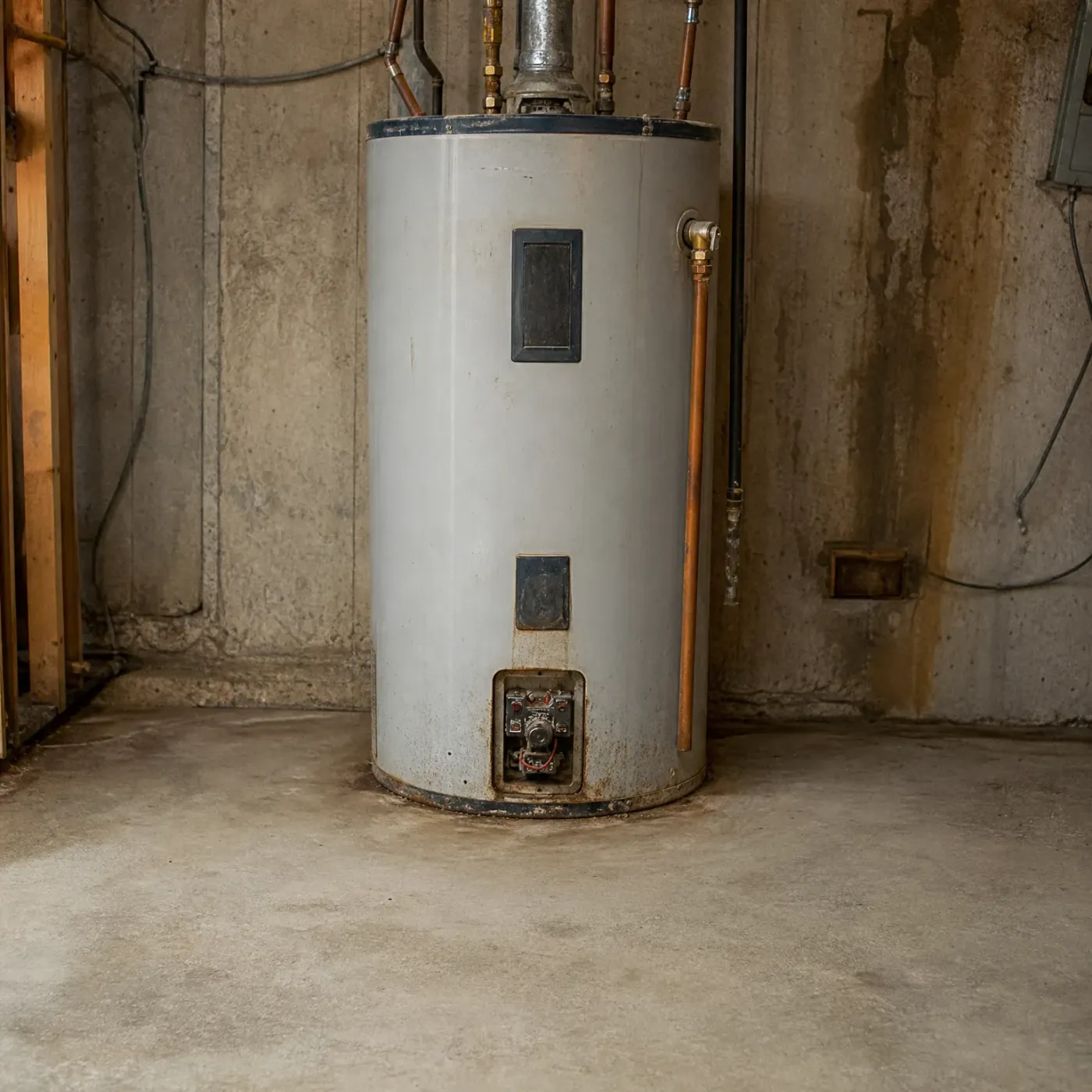

A white cylindrical water heater with copper piping and a gas control valve stands against a stained concrete basement wall on a bare concrete floor.

A tank that hasn't

Rust shows on the panels, wear visible on a unit that's gone years without attention. Sediment has had time to harden at the bottom, and the wiring and pipes around it are the same ones carrying the extra strain.

A woman in a cream cardigan and jeans stands with one hand raised facing an open front door of a gray horizontal-siding house, with a black lantern wall light, a potted shrub with yellow flowers, and a stone-faced porch column.

Once a year keeps it working the way it should

A flush once a year is the whole answer. It keeps the sediment from building up against that gas burner, keeps the popping and rumbling from starting, and keeps your gas bill from creeping up for no reason you can see. Skip it for a few years and the tank is still heating water, but it's working harder to do it, and that shows up on the meter before it shows up as a real problem.

If you're not sure when yours was last done, that's reason enough to get it looked at now rather than guess. A contractor who knows gas water heaters can check the tank, flush it if it needs it, and tell you what shape it's really in. Once you request that, you're not the one tracking down who's available or calling around. A contractor matched to your situation reaches out to you, and it's off your plate from there.

A living room corner with a light beige sofa holding a textured taupe cushion, a large ceramic vase of olive branches by a window, a framed neutral artwork on the wall, and a dark bowl with stacked books in the foreground.
Interior room corner with sunlight from a window, showing peeling paint and damaged plaster on the wall above a white baseboard, a wooden cabinet with a pale bowl on top, hardwood floor and a patterned rug.
Interior corner of a room with tan walls, white profiled baseboard and window trim, a wood-plank floor in sunlight, and green foliage visible through the window.
An empty room corner with cream walls, white baseboard, two windows with deep sills showing green foliage outside, and a wood plank floor lit by sunlight.
Empty room corner with beige walls, white beadboard wainscoting, chair rail and baseboard, a window with green foliage outside, and sunlight casting leaf shadows on the wall above a wood floor.
Sunlit room corner with a multi-pane window, beige walls, white baseboard, wood floor with a woven rug, and a dark wooden cabinet holding a ceramic table lamp below a framed picture.

A water heater pro near you

Send the form and the water heater tune-up stops being something to remember.

Connect with a pro

There's no charge for the request.





