

Tank or tankless water heater for a New Jersey home

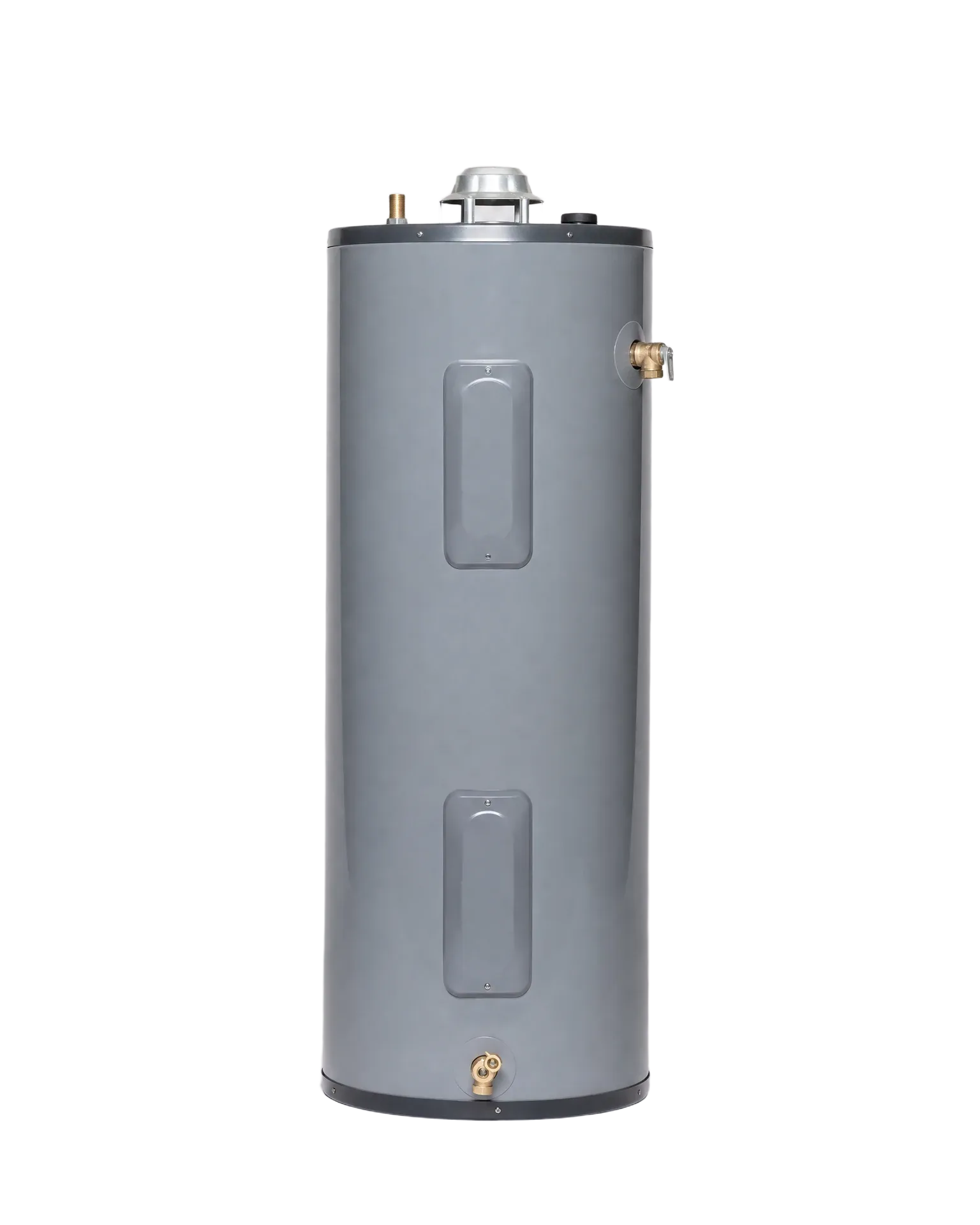
A gray cylindrical water heater with two access panels, a brass side valve, a bottom drain valve, and a metal vent cap on top, photographed against a plain light background.
Skip the search

Should I get a tank or tankless water heater in NJ?

You want hot water that holds up for a full house, without a surprise on your electric bill. With gas common in New Jersey homes and power here costing more than in most states, the choice between a tank and a tankless unit comes down to more than price at the store. You want to know which one actually fits your house and your gas line.

A gas tankless unit usually makes more sense than an electric tank

If your house already runs on gas, a tankless water heater uses that same line and heats water as you use it instead of holding fifty gallons hot all day. That matters more here because electric rates in New Jersey run high, and an electric tank keeps drawing power around the clock just to maintain its temperature. A gas tank is still a fair choice if your house doesn't need endless hot water, costs less to put in, and is simpler to replace later. Tankless runs longer, but needs the right gas line and venting for the unit, so that's worth checking before you decide. If your home already has electric only, a heat pump water heater is worth asking about too.

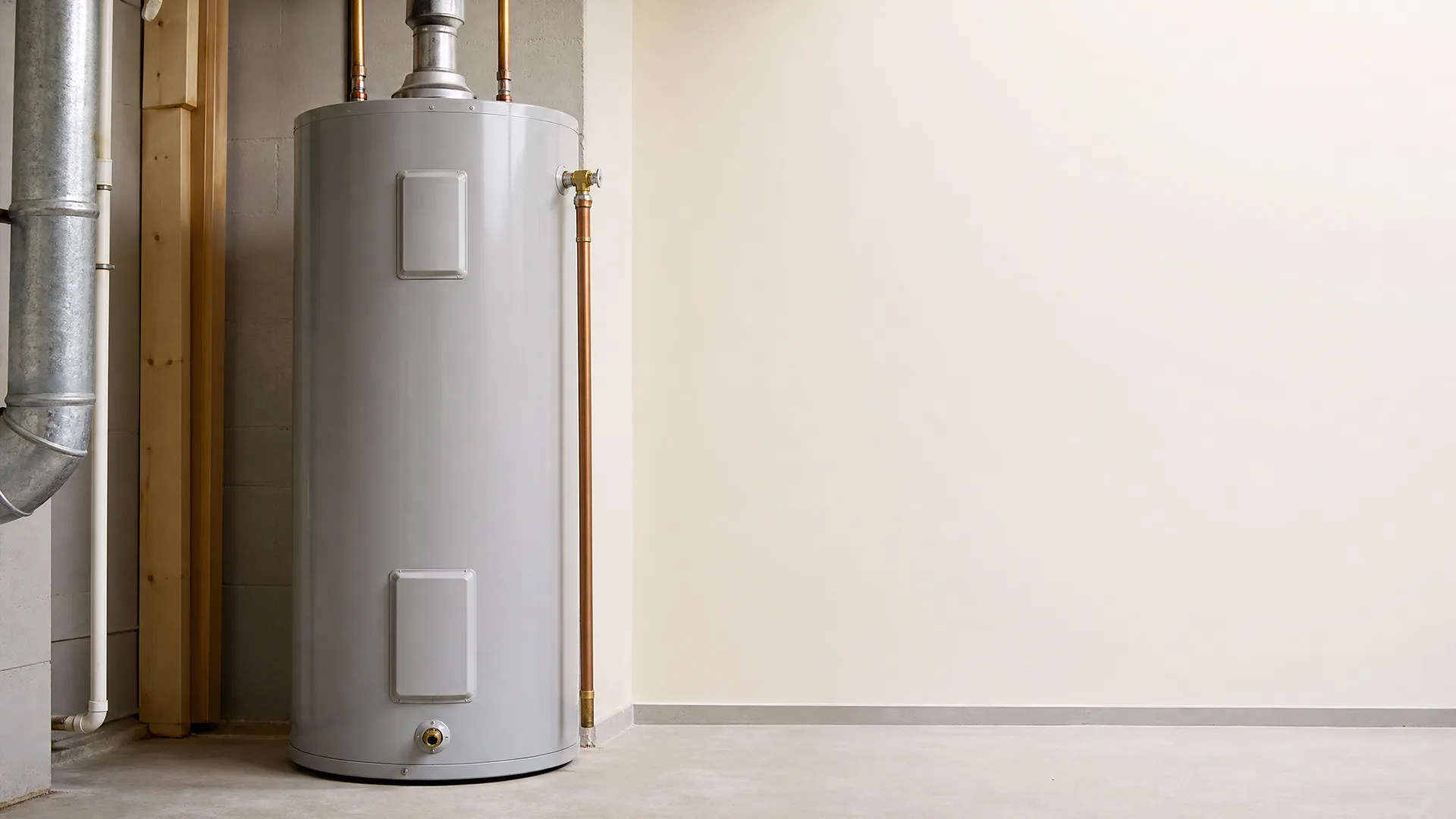
A gray cylindrical water heater with copper pipes stands in a basement corner beside a metal duct and wood framing, next to a plain beige wall and concrete floor.

How a gas tankless unit works

A gas tankless heater fires up only when you open a hot tap, running water past a heat exchanger instead of storing it hot all day. There's no standby loss from a tank sitting at temperature between showers. For a gas-heated New Jersey home, that means the burner does the work, not the electric grid, which matters where power costs more than it does almost anywhere else.

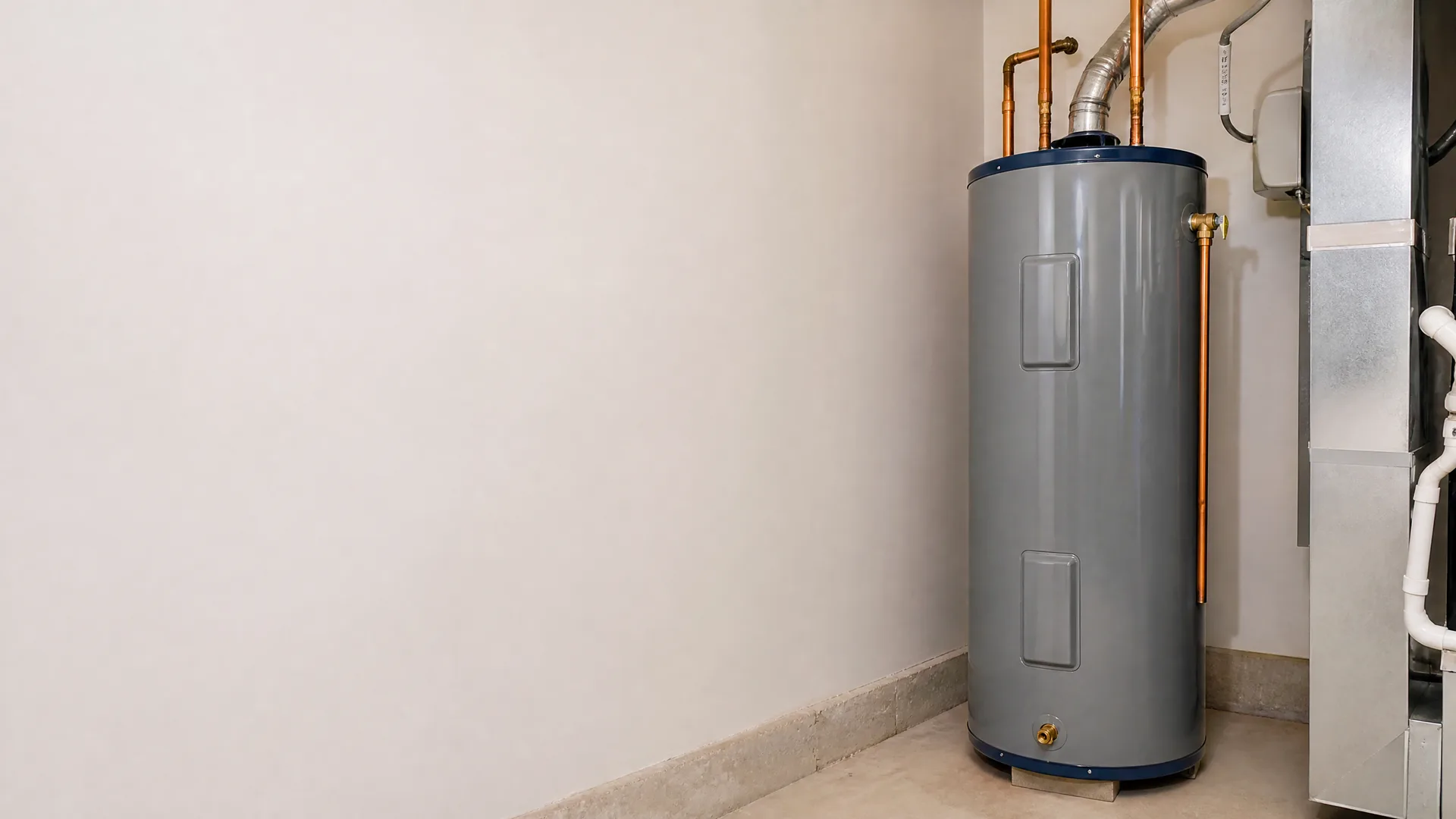
A gray cylindrical water heater with copper pipes stands in a corner of a basement utility room beside metal ductwork and white PVC piping.

What a tank keeps on hand

A storage tank holds somewhere between 40 and 50 gallons heated and ready, so two showers and a washing machine running close together draw from what's already hot. A tankless system instead has to heat water on demand at whatever rate your fixtures call for, and that rate is capped by the unit's size. A tank doesn't run into that ceiling, it just works through its reserve.

A closed dark laptop and a ceramic mug of coffee on a wooden dining table, with wooden chairs, a dark kitchen cabinet with cutting boards and a potted plant, and a leafy plant by a window in the background.

What this means for your house

If your family runs the dishwasher, a shower, and the washing machine around the same time, a tank can fall behind and hand someone a lukewarm rinse. A properly sized gas tankless unit keeps up because it heats on demand instead of drawing down a stored supply. That matters most in a full house where hot water gets used back to back, not one fixture at a time.

A tank also takes up floor space in the basement or utility closet and works on a schedule, heating water whether anyone needs it or not. That's the standby cost mentioned above, and in a state where electricity runs high, a gas-fired tank or tankless unit keeps that cost off your power bill. Either way, sizing and venting have to match your house, which is why this is worth getting right the first time instead of calling around to two or three plumbers, describing your setup over and over, and sorting through quotes that priced different equipment. One licensed New Jersey plumber who installs both types regularly can look at your home and tell you which one actually fits it.

A gray upholstered sofa with a matching cushion sits beside a potted plant and a wooden table holding a small green plant in a stone pot, near a curtained window.
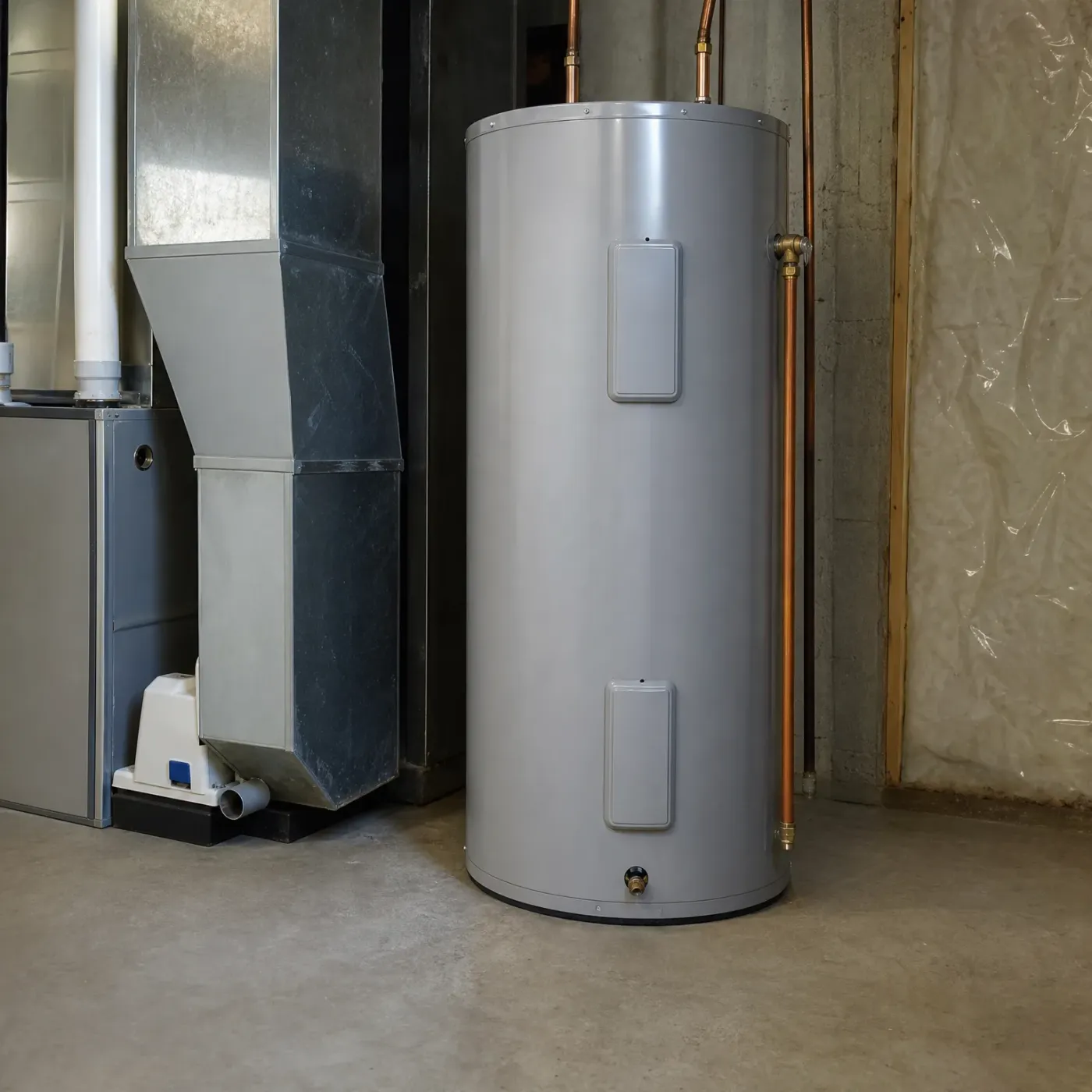
A gray cylindrical electric water heater with two access panels stands on a concrete floor in a basement, with copper pipes above and behind it, sheet-metal ductwork and a furnace to the left, and a plastic-covered insulated wall to the right.

A tank running right

This is a standard gas or electric tank, doing its job quietly in the corner next to the furnace. It holds a set amount of hot water and reheats it on a schedule, so there's always some ready without a long wait at the tap. It needs floor space and a flue or vent, and it loses a little heat to the basement air around the clock.
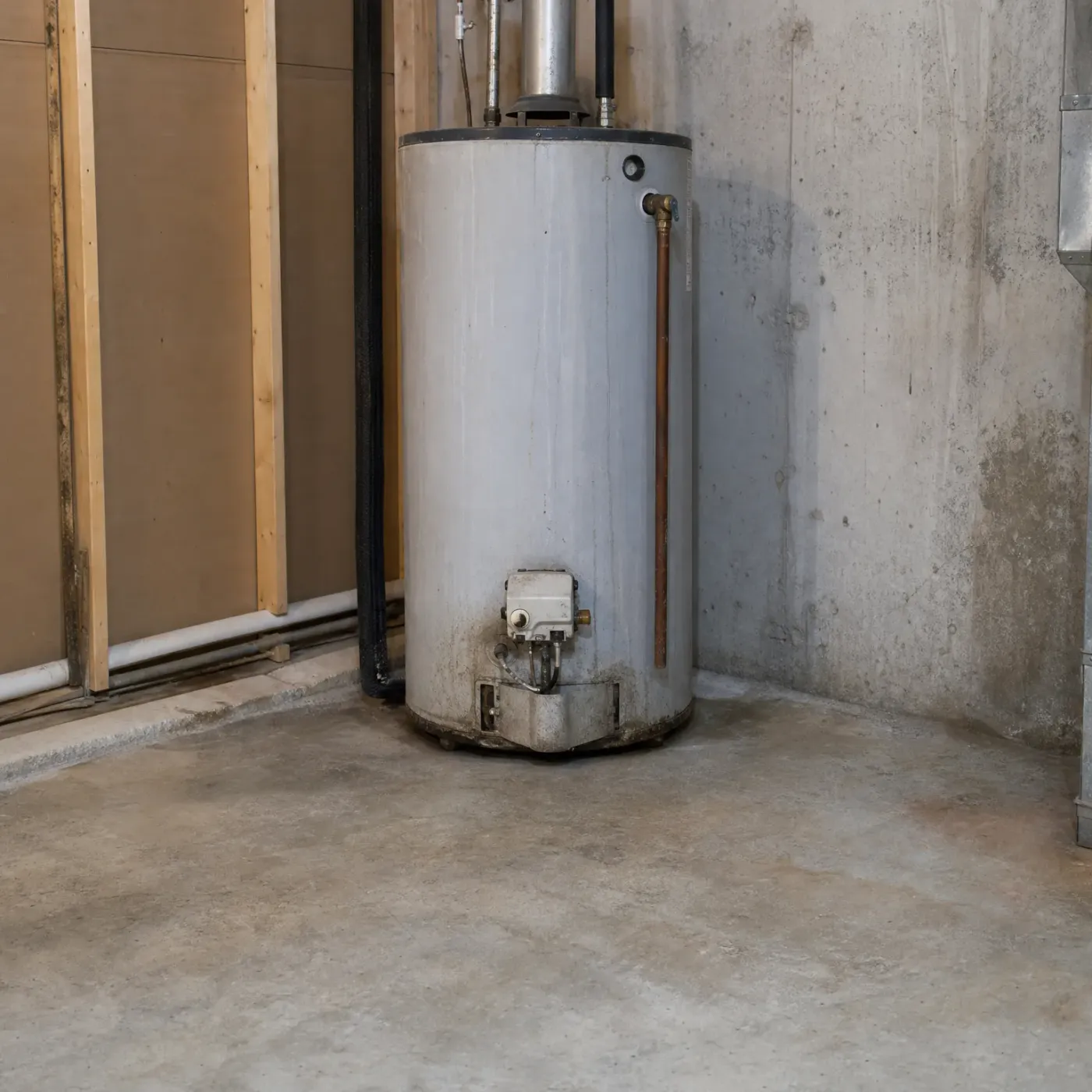

An older gas water heater with a copper pipe and flue stands on a concrete floor in a basement corner between a bare concrete wall and an unfinished wood-framed wall.

A tank on its way out

Rust around the base and grime on the burner assembly mean the tank is failing, not just old. Once the bottom starts to go, a leak is a matter of when, not if, and a flooded basement floor is a bigger job than a planned swap. A unit in this shape is worth replacing before it fails on its own schedule instead of yours.

A woman in a knitted shawl sits in a living room with a fireplace, shelves, a sofa with cushions, and a lamp by a bright window, looking off to the side.
A woman with long brown wavy hair in a green shirt over a white top stands in a living room with built-in white shelves, a ceiling fan, a potted plant and a sliding glass door.
A woman with shoulder-length gray-streaked hair in a light gray knit sweater stands smiling and looking off to the side in a living room with a sofa, houseplant, framed picture, and sunlit sliding glass door.
A woman with shoulder-length curly gray hair wearing a gray knit sweater stands near a window with a sheer curtain, looking to the side, with a blurred interior room behind her.
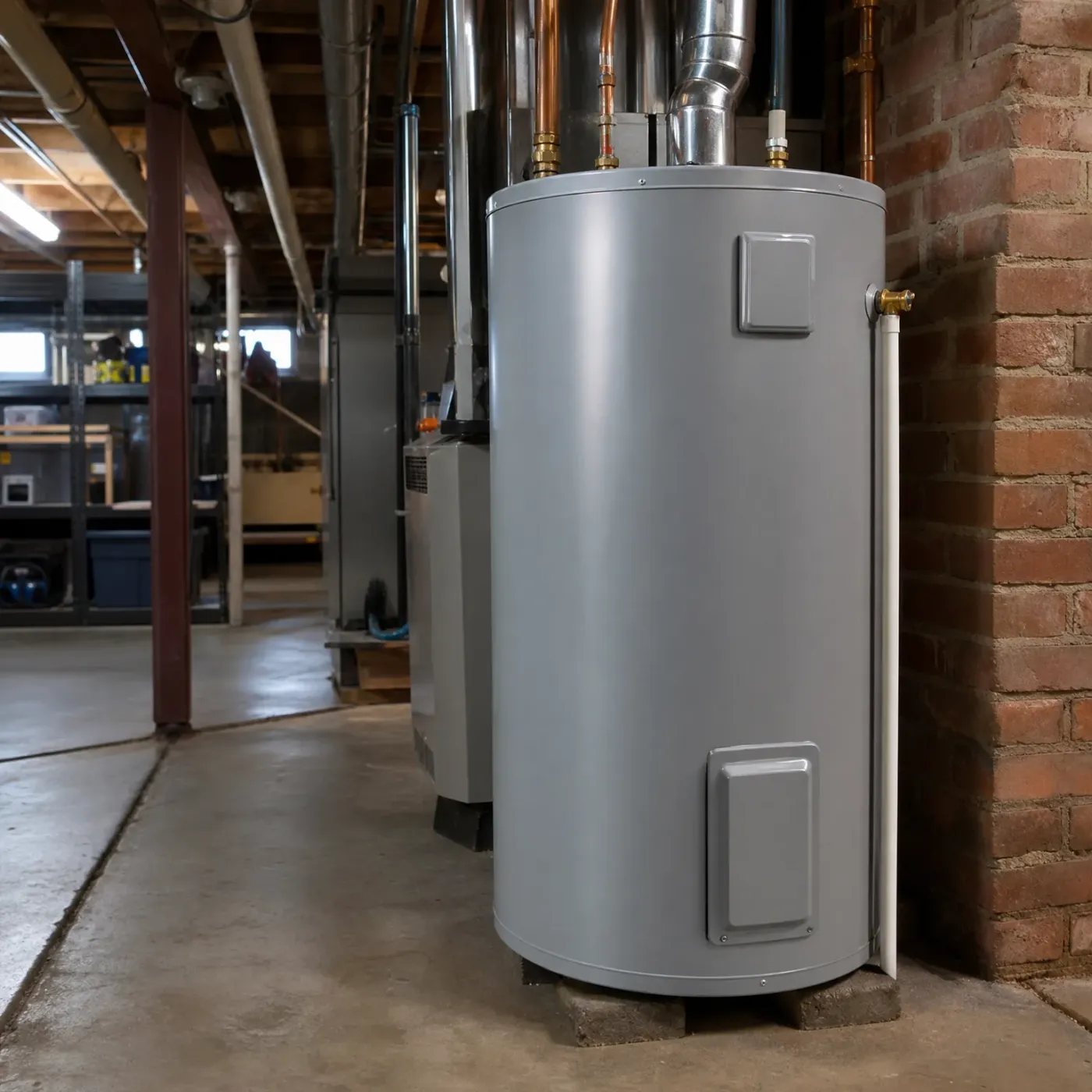
A gray cylindrical water heater with two access panels stands on concrete blocks beside a brick wall in a basement, with copper and metal pipes above and shelving visible in the background.

One form, no calling around

Your request goes to one pro, not a list of companies.

Describe the project once instead of to every installer.

Get a licensed local pro

Sending the form costs nothing.

Tank or Tankless: Weighing Your Options

Tank

  • A gas tank unit costs less to install than a tankless system, since it doesn't need the larger gas line or new venting a tankless conversion often calls for.
  • Repairs are simpler and parts are easier to find, since most plumbers in New Jersey have worked on tanks for years.
  • It keeps 40 to 50 gallons ready at once, so recovery time between uses matters less for a smaller household.
  • If the gas line, venting, and electrical already match what a tank needs, swapping one tank for another goes faster than adding tankless equipment.
  • A tank will run out partway through back to back showers and a load of laundry, where a tankless unit won't.

Tankless

  • A gas tankless unit heats water only when a tap is open, so it isn't holding a tank of water hot all day waiting to be used.
  • It takes up a fraction of the space a tank does, which matters in a smaller utility closet or basement corner.
  • It keeps up with a dishwasher, a shower, and a washing machine running at the same time, as long as it's sized for that load.
  • Installing one often means upgrading the gas line or venting to match what the unit needs, which a tank swap doesn't require.
  • It can supply hot water for as long as a tap stays open, since there's no tank to run dry.
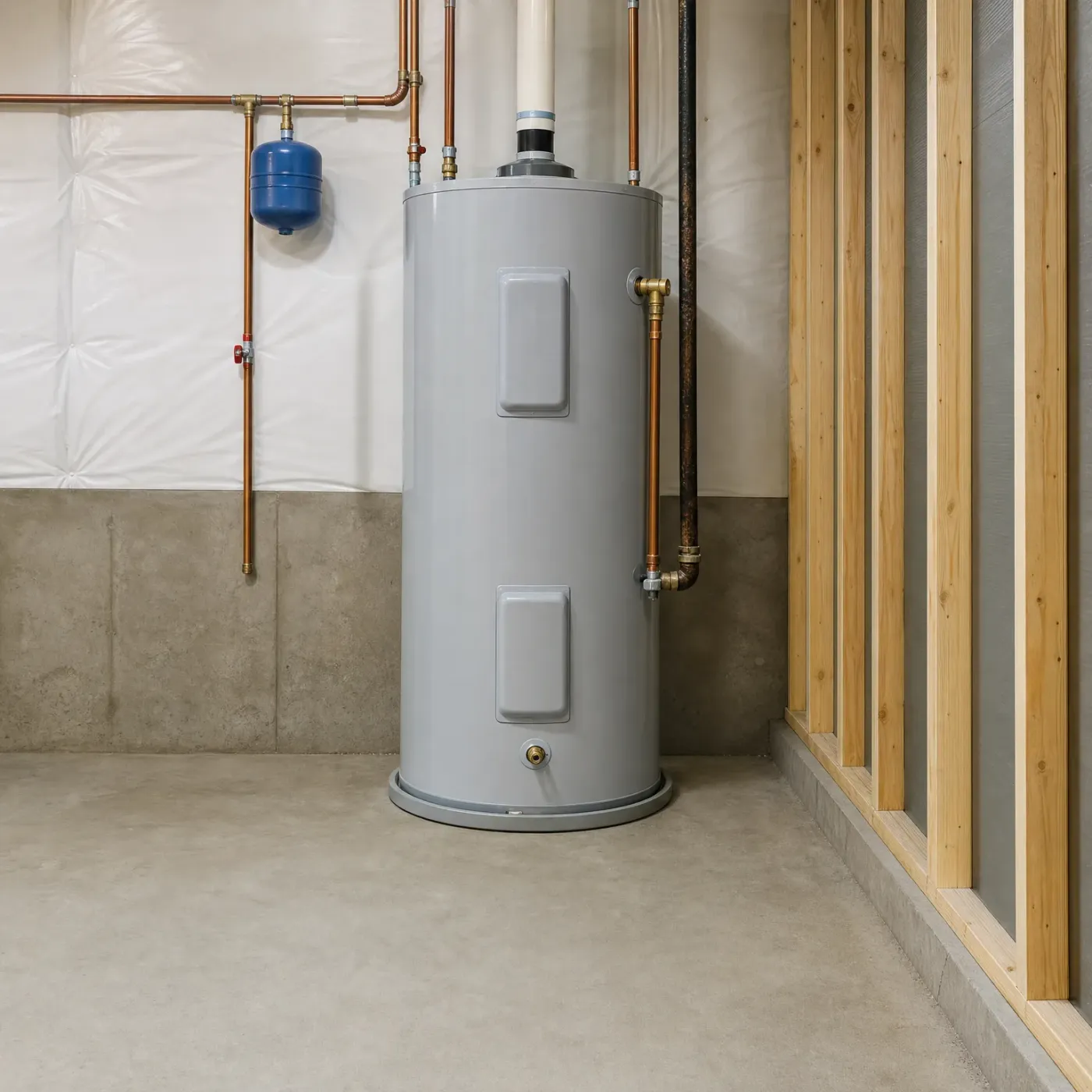
A gray cylindrical water heater stands on a concrete basement floor against a plastic-sheeted insulated wall, with copper supply pipes, a blue expansion tank, a black vertical pipe, and exposed wood wall framing at right.

A tank doing its job

This electric tank sits on copper lines with a vent pipe running overhead and an expansion tank clipped to the pipework. Nothing about it looks strained. It holds its water hot, waits for someone to turn a tap, and reheats on schedule without drawing attention to itself.

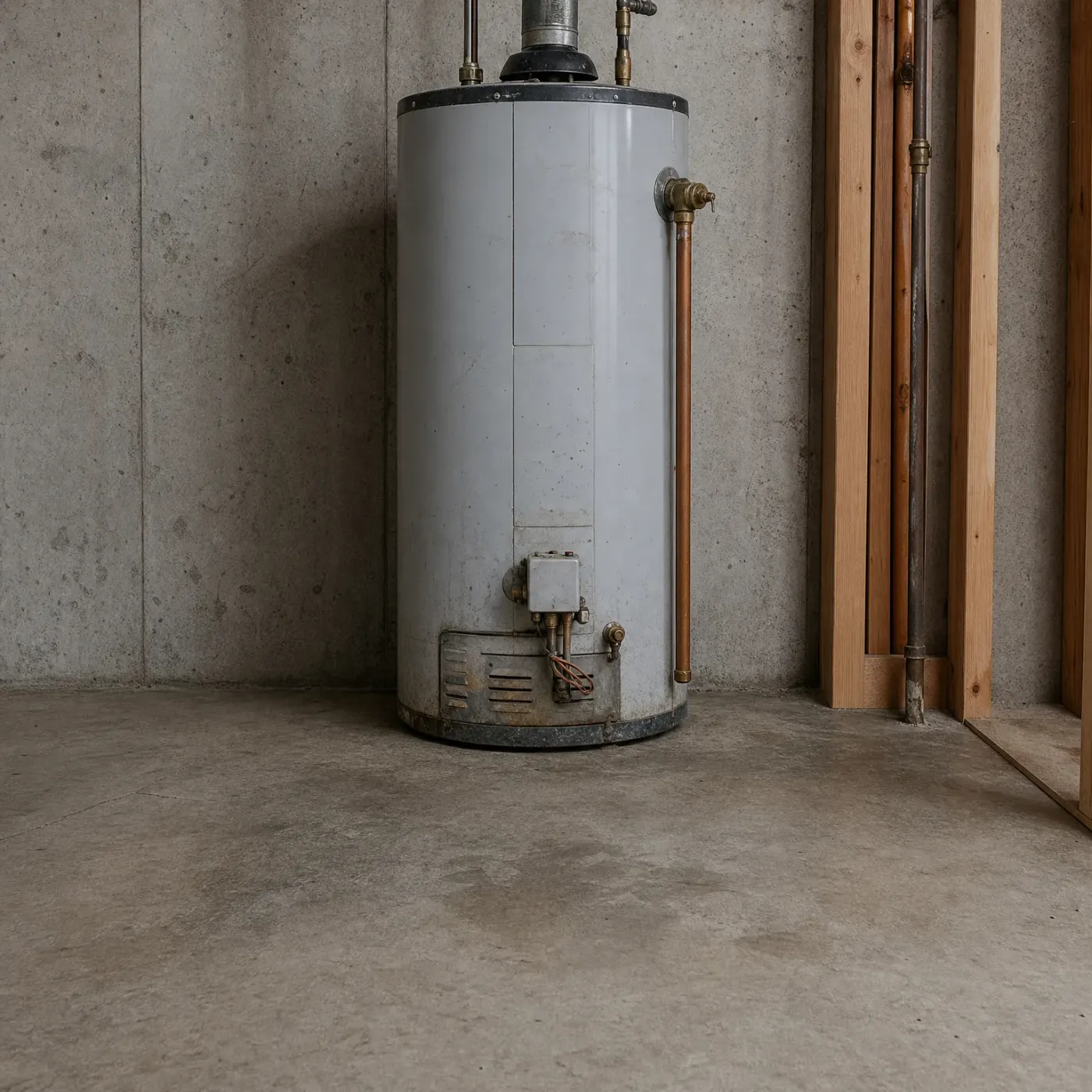
An older gray gas water heater with copper and brass piping stands on a concrete floor against a concrete wall, beside exposed wooden wall framing and vertical pipes.

A tank past its prime

This gas tank shows rust and grime around the burner, the kind of wear that shows up after years of lighting and reheating the same water. A unit in this shape is a reason to ask what replacing it with tank or tankless would mean for a house like yours before it fails on its own schedule.

Is your water heater actually keeping up at home?

Run the dishwasher during someone's shower and see what happens. If the water turns lukewarm or cold before the shower's done, your tank is undersized for what your house asks of it at once. Check the tank itself too. Rust at the base, a popping or rumbling sound as it heats, or water pooling underneath are signs it's failing, and a tank that fails fully can leak a basement's worth of water onto the floor around it. A pilot that won't stay lit or a breaker that keeps tripping on an electric unit are worth noting before you decide what to replace it with.

  1. Cold water enters the heater through the inlet line.

  2. A gas burner or electric element brings it up to temperature.

  3. In a tank, that hot water sits stored until a tap opens.

  4. In a tankless unit, the heat exchanger fires only when water flows.

73.1% of homes statewide heat with gas

Almost three out of four homes in New Jersey heat with gas, and if yours is one of them, your water heater most likely runs on the same gas line. That makes a gas tankless conversion a straight swap rather than a new fuel to bring into the house.

ACS 2020-2024 5-year B25040

A woman with her hair in a bun holds a sleeping young child against her chest, both wrapped in a textured beige knit blanket on a sofa in a dimly lit room with a lamp, framed picture, and bookshelf behind them.
An older woman with gray hair in a bun and glasses, wearing a beige knit sweater, smiles while looking to the side in a warmly lit kitchen, with a loaf of bread on the counter in the foreground and a snowy scene outside the window.

A tank keeps a fixed supply hot and ready. A tankless unit heats what you need, when you need it, and keeps up as long as it's sized right for your house. Either one can serve a New Jersey home well if it matches how your household uses hot water and what gas line and venting it already has to work with. Getting that match right is where a local installer earns the job, someone who works on both kinds of systems all year in homes like yours and knows which one tends to fail here and why. That's one licensed plumber looking at your actual setup, not a handful of companies bidding on a guess. You won't need to explain your situation more than once or sort through competing quotes to figure out who's right. You'll get a straight answer about what your house needs and what it takes to install it properly.

A dark gray cylindrical water heater with copper pipes at its top stands against a concrete basement wall, with wooden shelving and framing in the foreground at both edges.

Skip the search

One installer gets your project, so there's no bidding war over it.

Step 1 of 3: Equipment